
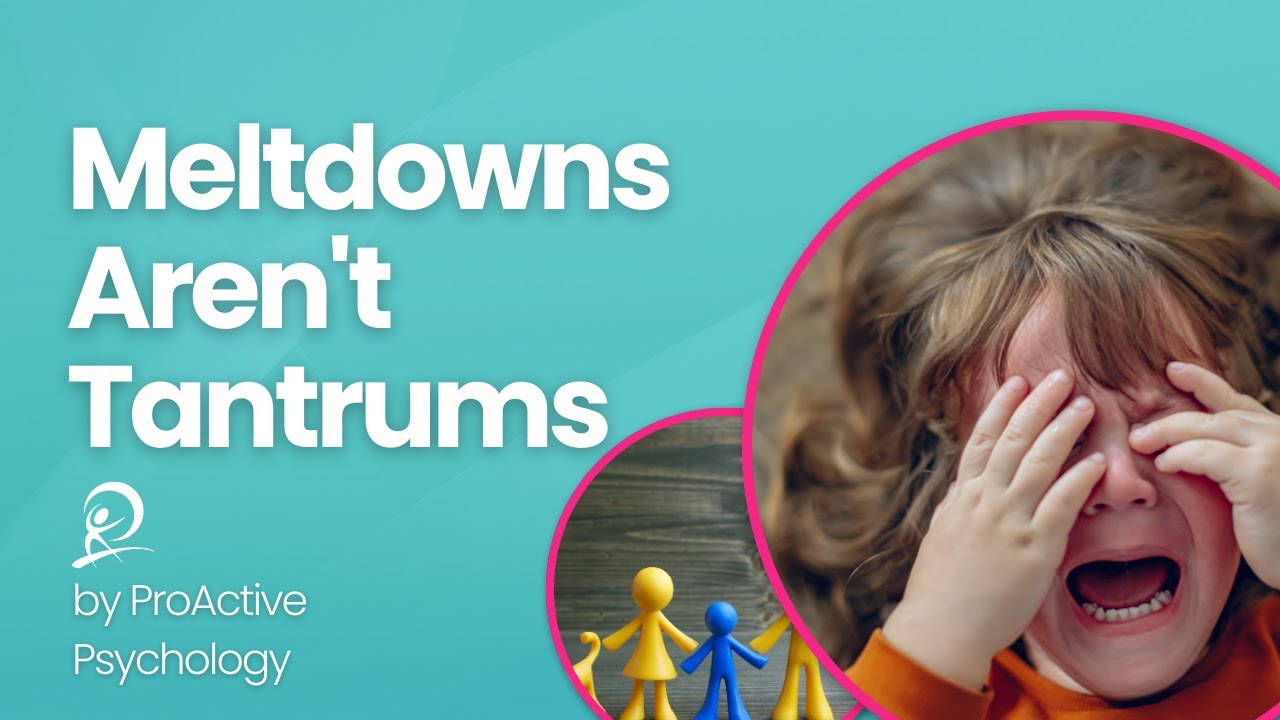
Your child’s screaming. Again. You’re in the middle of the supermarket, and they’ve completely lost it; over a cereal box. Everyone’s staring. You can feel the judgment radiating from the woman in the biscuit aisle. She’s probably thinking, Just another parent who can’t control their kid’s meltdowns.
Here’s what she doesn’t know.
This isn’t bad behaviour. It’s not a child who needs stricter discipline. Your child’s brain and body are overwhelmed, and they’ve hit a breaking point. For neurodivergent kids (those with autism, ADHD, or sensory processing differences), what looks like a tantrum is actually something completely different.
To absolutely clear: you’re not spoiling your child by responding with empathy.
You’re not “giving in” when you stay calm instead of yelling.
You’re doing precisely what their overwhelmed nervous system needs.
Here’s What’s Really Happening
A meltdown isn’t the same as a tantrum, even though they can look similar from the outside.
A tantrum is goal-oriented.
Your child wants that second cookie, and they’re using tears and screams to try to get it. They’re still in control, they might even pause mid-cry to check if you’re watching. If you meet their goal (or they realise it’s not working), the tantrum stops.
A meltdown is different. It’s an involuntary stress response. Your child’s nervous system has hit overload, and they’ve lost the ability to self-regulate. They’re not choosing to scream or throw things, they literally can’t stop. Think of it like a circuit breaker flipping when there’s too much electricity running through the system. The meltdown has to run its course.
During a true meltdown, your child can’t access the thinking part of their brain. That’s why reasoning, explaining, or bribing doesn’t work in that moment. Their prefrontal cortex (the part of the brain that handles logic and self-control) has gone offline. The emotional, survival part of their brain (the amygdala) has taken over completely.
One mum said her daughter described it like this: “It feels like my brain is on fire and I can’t make it stop, even when I want to.”
The Missing Piece
Many neurodivergent kids have sensory processing differences. Their brains don’t filter incoming information the same way most people’s do. What feels mildly uncomfortable to you might feel physically painful to them.
That scratchy tag on their shirt? It might feel like sandpaper scraping their skin all day. The fluorescent lights at school? Like staring into a strobe light for six hours. The noise in the shopping centre? Like standing next to a jet engine.
When sensory input builds up throughout the day (or even in a single overwhelming moment), it can push a child past their threshold. The meltdown that follows isn’t about the “one thing” that seemed to trigger it. It’s about the accumulated stress their nervous system has been trying to manage, and finally couldn’t anymore.
A 2023 study at UC San Francisco found that children who become overwhelmed by sensory input show hyperactivity in brain regions that try to gain control and filter information. Their brains are working overtime just to cope with everyday environments. No wonder they eventually crash.
5 Things to do Instead
Forget everything you’ve heard about ignoring tantrums or using stricter discipline. Those approaches don’t just fail with meltdowns; they make things worse. Here’s what actually helps.
1. Stay calm (even when it feels impossible)
You are your child’s anchor. When you stay steady, you’re showing their panicked brain that there’s no real emergency and they’re safe. Staying calm will feel hard, especially when you’re embarrassed, frustrated, or at the end of your rope. But your calm is contagious.
Take a few deep breaths. Lower your voice. You might not be able to stop the waves, but you can be the life buoy that keeps them afloat until the storm passes.
Research backs this up: a 2023 study found that toddlers whose parents responded to outbursts with calm empathy (instead of anger or control) developed better emotional regulation and had fewer meltdowns over time.
2. Reduce sensory overload immediately
During a meltdown, less is more. Look around and ask yourself: what can I dial down right now?
If you’re in a bright, noisy place, move to a quieter spot. Dim the lights. Turn off the music. Put headphones over their ears if you have them (many parents keep a “meltdown kit” in the car with noise-cancelling headphones, sunglasses, and a favourite calming toy).
Give your child physical space. Some kids want a hug when they’re upset, but many neurodivergent children feel more panicked if they’re suddenly grabbed or held. Follow their cues. If they’re too far into the meltdown to tell you, assume they need space.
One parent shared that having a designated “safe spot” at home, a quiet corner with soft cushions and low lighting, changed everything. Her son learned to go there when he felt overwhelmed, before the meltdown even hit.
3. Keep communication simple
In the middle of a meltdown, less talking is better. Avoid lecturing, rapid-fire questions, or demanding they explain what’s wrong. They can’t process any of that right now.
Instead, use short, soothing phrases: “I’m here.” “You’re safe.” “I know this is hard.”
Don’t demand eye contact or force conversation. Many overwhelmed kids need to avert their gaze or go silent to self-soothe.
Save the big discussions for later, when they’re truly calm and receptive. After a meltdown, your child might feel embarrassed or exhausted. Gentle reassurance and a return to something comforting (a favourite show, a snack, a cuddle if they want it) helps them recover.
4. Give them time (and don’t take it personally)
Meltdowns don’t stop on a dime. A child’s nervous system can take 20 to 60 minutes to fully settle. During this time, you need patience more than strategy.
If you’re at home, sit nearby quietly. Let them know you’re staying close. If you’re in public, guide them to the car or a less stimulating space, then give them room to process.
Your child might say hurtful things during a meltdown (“I hate you!”). That’s the flood of stress talking, not a measured opinion of you as a parent. Try not to take it personally. Once they’re calm, they often feel sorry about what they said.
Picture yourself as a safety net. You’re there, you’re not going anywhere, but you’re also giving them freedom to express big feelings safely.
5. Become a trigger detective
Not all meltdowns can be avoided, but understanding patterns helps. Try keeping a simple log for a few weeks. Note what time meltdowns happen, what preceded them, and what the environment was like.
You might discover your child melts down every day around 5pm (after-school exhaustion and hunger). Or that crowded, noisy places consistently push them over the edge. Or that sudden changes in routine are the common thread.
Common triggers for neurodivergent kids include sensory overload, routine changes, transitions between activities, anxiety, and communication difficulties. Once you spot patterns, you can take proactive steps: bring headphones to loud places, give five-minute warnings before transitions, and use visual schedules for predictability.
One dad realised his daughter’s meltdowns always happened when two minor frustrations piled up on the same day. A scratchy sweater plus an unexpected schedule change. Knowing that pattern helped him prevent some meltdowns before they started.
What NOT to do
Don’t yell or punish. Your child is already in a state of overwhelm. Adding your anger or threats escalates their panic, making the meltdown worse and longer. Research shows that shouting at children has effects similar to physical punishment: increased stress, more aggression, and higher anxiety.
Don’t shame them. Saying “You’re being ridiculous” or “What’s wrong with you?” teaches them that the people they love see them as “bad” when they’re in distress. That’s traumatic.
Don’t try to reason with them during a meltdown. Their thinking brain is offline. Logic won’t land.
Teaching them Skills for Next Time
In the moment, your job is to help your child through the meltdown safely. In the long term, you’re building their ability to self-regulate.
Help them learn to name emotions in calm moments. “I feel frustrated” or “I’m getting overwhelmed” can start to engage their thinking brain again, making big feelings less scary.
Practice coping skills when they’re already calm. Deep breathing, progressive muscle relaxation, and using sensory tools (stress balls, weighted blankets, fidget toys). Make it fun. Do balloon breaths together before bed. Play the “tense like a robot, floppy like spaghetti” game. As these skills become familiar, your child can start reaching for them when stress builds.
Later (hours or even the next day), gently talk about what happened, not as a lecture, but as a team problem-solving session. “Yesterday, you got really upset when the party got loud. What did that feel like? What might help next time?” You’re showing them you’re partners in managing this, not adversaries.
When to Get Professional Support
Sometimes meltdowns remain frequent or intense despite your best efforts. That’s certainly not failure; it’s a sign that professional support could help.
Consider reaching out if meltdowns happen multiple times a week, if they’re stopping your child from participating in school or activities, if there are other developmental concerns (communication delays, extreme hyperactivity, social challenges), or if your child is hurting themselves or others during meltdowns.
A good psychologist or occupational therapist can give you specialised strategies tailored to your child’s brain. They can help identify underlying issues like autism, ADHD, anxiety disorders, or sensory processing challenges. A diagnosis isn’t a label for “something wrong”; think of it more as a roadmap for better understanding your child.
You’re Learning Too
Watching your child have meltdowns is exhausting. It can make you feel helpless, isolated, and like you’re failing. But you’re not failing. You’re learning to support a child whose nervous system works differently, and that takes time, patience, and support.
Celebrate the small wins. The meltdown was five minutes shorter than last time. The morning your child used a coping strategy before hitting full overwhelm.
If you’re feeling stuck right now, like many parents walking this path, reaching out for help is a strength, not a weakness. Consider talking to your GP about a referral to a psychologist specialising in child development and neurodiversity.
At ProActive Psychology, we work with families on exactly these challenges. Helping parents understand their child’s unique nervous system and building practical strategies that actually work. We’re here if you’d like to speak with someone who gets it.
Your warm, supportive response to meltdowns teaches your child they’re loved unconditionally, especially when life feels hardest. That sense of security becomes the foundation of their own ability to handle big feelings.
References
Anglicare Victoria (2023). Understanding meltdowns vs tantrums in children. Retrieved from https://www.anglicarevic.org.au
Child Mind Institute (2024). Meltdowns and tantrums: What’s the difference? Retrieved from https://childmind.org
National Autistic Society UK (2024). Meltdowns: A guide for all audiences. Retrieved from https://www.autism.org.uk
Royal Children’s Hospital Melbourne (2023). Behaviour management: Alternatives to physical punishment. Retrieved from https://www.rch.org.au
Today’s Parent (2023). How parents’ calm responses help toddlers regulate emotions. Retrieved from https://www.todaysparent.com
University of California, San Francisco (2023). Brain patterns in children with sensory processing challenges. Retrieved from https://www.ucsf.edu